Hologic, Inc., a global leader in women’s health, today announced that 12 studies featuring Hologic technologies and research will be presented at the Radiological Society of North America (RSNA) Annual Meeting in Chicago, Illinois next week.
This press release features multimedia. View the full release here: https://www.businesswire.com/news/home/20261127152300/en/
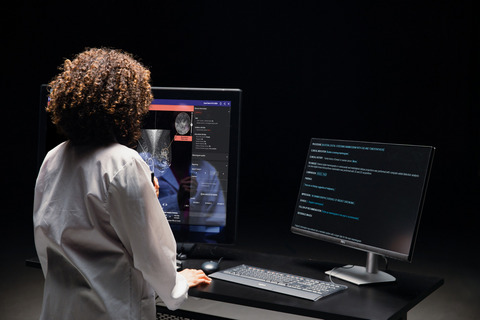
Among them, two studies offer new insights into breast cancer screening: one evaluating how artificial intelligence may help radiologists prioritize higher-risk 3D mammography exams, and another examining early increases in screening rates after changes in national guidelines recommended mammography beginning at age 40.
“The most important questions in breast imaging, from which exams need a radiologist’s attention first to whether updated guidelines are reaching women, can only be answered with data,” said Jyoti Gupta, Ph.D., CEO of Breast and Skeletal Health Solutions at Hologic. “That’s why we partner with leading clinicians and researchers to study both our technologies and how screening is delivered, and why we’re proud to see 12 of those studies presented at RSNA this year.”
AI scores helped identify higher-risk 3D mammography exams
One study, led by Manisha Bahl, MD, MPH, Associate Director of Quality for Breast Imaging at Mass General Brigham and Associate Professor of Radiology at Harvard Medical School, evaluated whether AI scores could help identify 3D mammography screening exams with the highest suspicion for malignancy that may warrant expedited radiologist review.1
In the study, researchers retrospectively reviewed 7,500 3D mammography screening exams performed between January 2016 and June 2019. The exams included 600 cancers and were analyzed using Genius AI® Detection 2.0, Hologic’s AI-powered breast cancer detection aid.
To indicate the likelihood that breast cancer is present, the Genius AI Detection technology assigns a score from 0 to 100 to each suspicious lesion on an exam and then takes all the scores together to create an overall “case score.”
The study found that cancers were more concentrated among the exams with the highest AI scores. The top 20% of exams by AI scores included 62.0% of the cancers. Using a “high-priority” threshold score of 65, 41.5% of the cancers were found to be in the high-priority review group, which included 11.6% of the total exams.
“When AI flags a screening exam for high-priority review, there may be an opportunity for the radiologist to assess that exam sooner and, if needed, coordinate additional imaging while the patient is still onsite,” said Dr. Bahl. “This approach has the potential to reduce delays in the diagnostic pathway and support faster answers for patients.”
The study also found that lower AI score thresholds captured more cancers but required a larger share of the worklist to be reviewed as high priority.
Screening increased most among women ages 40 to 44 after updated USPSTF guidance, new study shows
Another study being presented at RSNA evaluated changes in screening mammography use before and after the U.S. Preventive Services Task Force (USPSTF) updated its breast cancer screening recommendation in April 2024.2 The updated guidance recommends biennial screening mammography for women ages 40 to 74, lowering the recommended starting age from 50 to 40.
Researchers at Hologic conducted an analysis using the MarketScan commercial insurance claims database. The study included more than 5.4 million commercially insured women in the U.S. ages 40 to 64 across annual cohorts in 2022, 2023 and 2024.
Screening increased across all age groups studied. The largest increase was seen among women ages 40 to 44. Screening prevalence in this age group rose from 40.9% in 2022 to 45.1% in 2024, an increase of 4.2 percentage points.
Increases were smaller among women ages 45 to 64. The gap in screening rates between women in their early 40s and those ages 50 to 64 also narrowed.
The pattern held across rural and non-rural populations and across U.S. regions. Among women ages 40 to 44, screening rose from 41.2% to 45.7% in non-rural areas and from 38.9% to 42.1% in rural areas. The Western U.S. saw the largest regional increase among women ages 40 to 44, from 32.7% to 40.1%.
Advancing breast health through innovation and evidence
Breast cancer remains one of the most common cancers among women.3 Regular screening can help detect cancer earlier, when it may be easier to treat.4 As screening recommendations evolve and imaging volumes increase, new evidence can help health systems understand how to support access, efficiency and high-quality care.
“We are encouraged to see new research suggesting that more women in their 40s are getting regular mammograms following the updated USPSTF guidance, especially given the recent rise in breast cancer among younger women,” said Dr. Jyoti Gupta. “This progress is meaningful, but there is still more work to do to support regular screening and earlier detection, when survival rates are typically higher. Research and innovation are both essential to that effort, from helping us better understand screening patterns to exploring how AI can help radiologists prioritize higher-risk cases for review.”
Other Hologic-related scientific studies being presented at RSNA include:
- “Prior Mammograms Improve AI-based Breast Cancer Risk Prediction: A Multi Time-Point Approach Using Deformable Attention” [M3-SSBR03-3]
- “AI as Reading Aid versus Triaging in Breast Cancer Screening: A Prospective Multicenter Study” [M3-STCE2-4]
- “Symptomatic versus Asymptomatic False-Negative Breast Cancers on Digital Breast Tomosynthesis: A Ten-Year Screening Cohort” [T2-SPBR-7]
- “Study-Wise AI for Mammography: Integrating Multi-View and Multi-Modality Context to Improve Cancer Detection” [T5B-SPBR-3]
- “Mammographic Density Change and Screening Recall Following GLP-1 Receptor Agonist Therapy” [T5B-SPBR-7]
- “Strategies to Optimize Reading of Screening Digital Breast Tomosynthesis” [W2-SPBR-5]
- “Optimization of AI Thresholds for Cancer Detection on Screening Digital Breast Tomosynthesis” [R5B-SPBR-7]
- “Comparing the Performance of Top Ranked AI Models from the RSNA 2023 Screening Mammography Breast Cancer Detection AI Challenge to Commercial AI Models” [T3-SSBR05-5]
- “Improving Efficiency of Breast Screening With AI: Autonomous Reading of Low-Suspicion Mammograms and Supplemental Imaging Selection” [T3-SSBR05-2]
- “CEM-Guided Biopsy of Contrast-Only Lesions: Predictors of Malignancy from a Multicenter Study” [M5B-SPBR-5]
Hologic will showcase its technology innovations at RSNA, including its Genius AI Detection PRO solution, I-View® 2.0 Contrast-Enhanced Mammography software and new Magseed® Pro marker for advanced wire-free localization, part of the Sentimag® platform. The company will also host multiple lunch and learn sessions with radiology experts.
For more information about Hologic’s presence at RSNA, please visit www.Hologic.com/RSNA.
About Genius AI Detection
Hologic’s Genius AI Detection solution is an innovative mammography screening technology designed to locate lesions likely representing breast cancer. Suspicious areas are highlighted at radiologists’ workstations for concurrent reading to support smart, decisive interpretation. Hologic’s deep learning algorithm is fed by the accumulation of a large, diverse patient base, providing rich insight and intelligence. For more information, please visit Genius AI™ Detection Technology | Hologic.
About Hologic, Inc.
Hologic, Inc. is a global leader in women’s health dedicated to developing innovative medical technologies that effectively detect, diagnose and treat health conditions and raise the standard of care around the world. To learn more, visit www.hologic.com and connect with us on LinkedIn, Facebook, X, Instagram and YouTube.
Forward-Looking Statements
This news release may contain forward-looking information that involves risks and uncertainties, including statements about the use of Hologic products. There can be no assurance these products will achieve the benefits described herein or that such benefits will be replicated in any particular manner with respect to an individual patient, as the actual effect of the use of the products can only be determined on a case-by-case basis. In addition, there can be no assurance that these products will be commercially successful or achieve any expected level of sales. Hologic expressly disclaims any obligation or undertaking to release publicly any updates or revisions to any such statements presented herein to reflect any change in expectations or any change in events, conditions or circumstances on which any such data or statements are based.
Hologic, Genius AI Detection, I-View, Magseed and The Science of Sure are trademarks and/or registered trademarks of Hologic, Inc. and/or its subsidiaries in the United States and/or other countries.
References
1 Bahl M, Kim YT, Kim H, Do S. Cancer enrichment using AI scores for worklist prioritization in screening digital breast tomosynthesis. Presented at: Radiological Society of North America (RSNA) 2026 Annual Meeting; December 3, 2026; Chicago, IL. Abstract R5A-SPBR-2.
2 Pak J, Zhou X, Pohlman S. Age-specific changes in screening mammography utilization following the 2024 USPSTF recommendation update. Presented at: Radiological Society of North America (RSNA) 2026 Annual Meeting; November 29, 2026; Chicago, IL. Abstract S2-SSBR01-1.
3 Centers for Disease Control and Prevention. Breast Cancer Statistics. Breast Cancer. February 26, 2024. Accessed November 17, 2026. https://www.cdc.gov/breast-cancer/statistics/index.html.
4 American Cancer Society. ACS breast cancer screening guidelines. www.cancer.org. 2023. Accessed November 17, 2026. https://www.cancer.org/cancer/types/breast-cancer/screening-tests-and-early-detection/american-cancer-society-recommendations-for-the-early-detection-of-breast-cancer.html.
View source version on businesswire.com: https://www.businesswire.com/news/home/20261127152300/en/
Media gallery